Single-Focus or Multi-Functional? Why One-Legged Parks Are Failing.
- Share
- publisher
- Katherine Zhang
- Issue Time
- Jul 17,2026
Summary
Single-attraction indoor parks face limited audiences, revenue ceilings and seasonal downturns. Based on global operational experience, Pokiddo recommends an integrated multi-functional venue model combining soft play, trampolines, climbing, games and party rooms. This all-age layout delivers stable, year-round revenue and stronger market competitiveness than single-format parks.
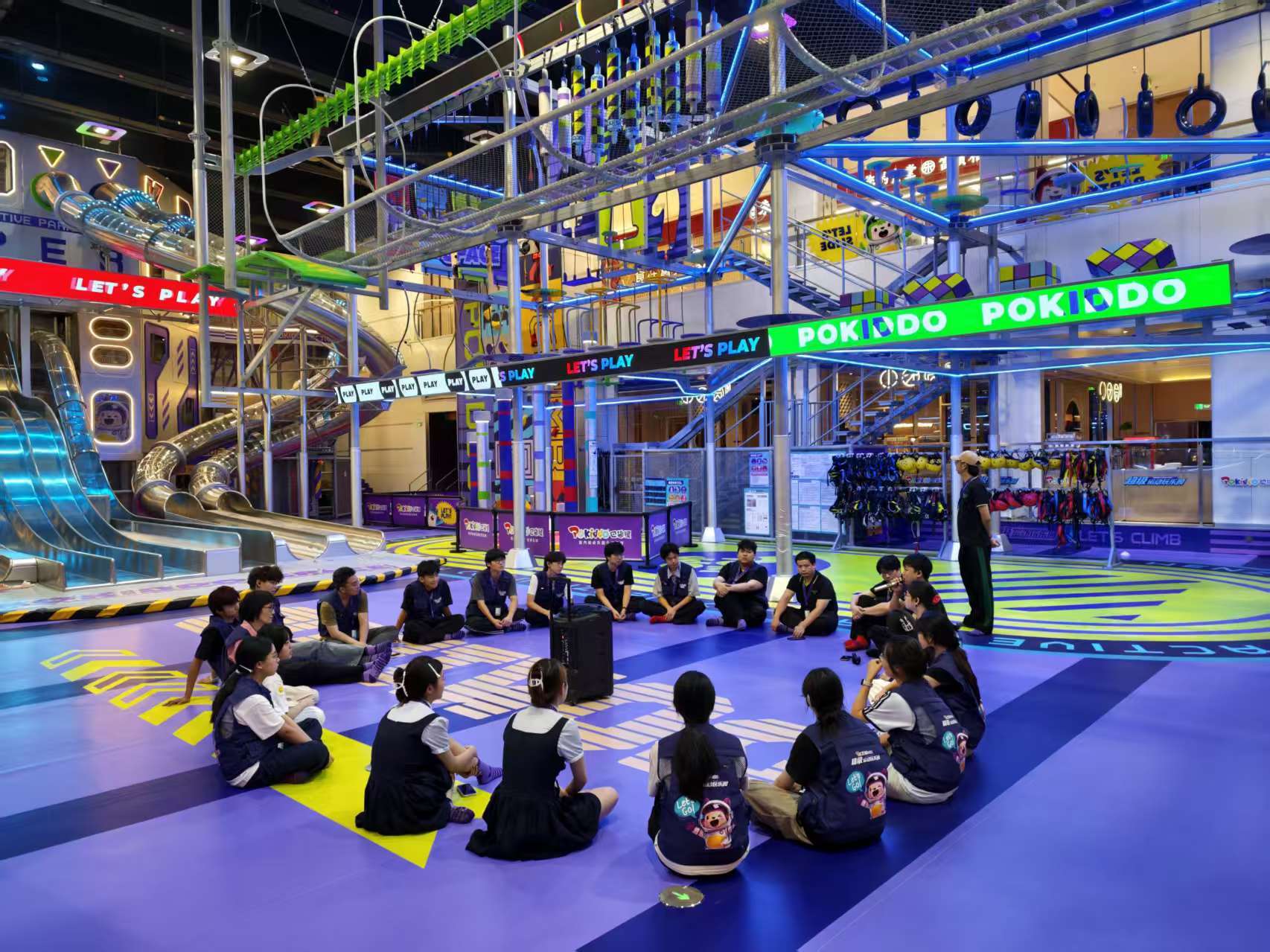
The parks in our network that run the strongest numbers use a zone structure built around one principle: every person who walks in should find something made for them.
Here's what a 2,000 sq.m integrated venue typically looks like in practice:
A partner called me a few months back with a question I've heard probably fifty times: "Should I open a trampoline park or a soft playground? Which one actually makes more money?"
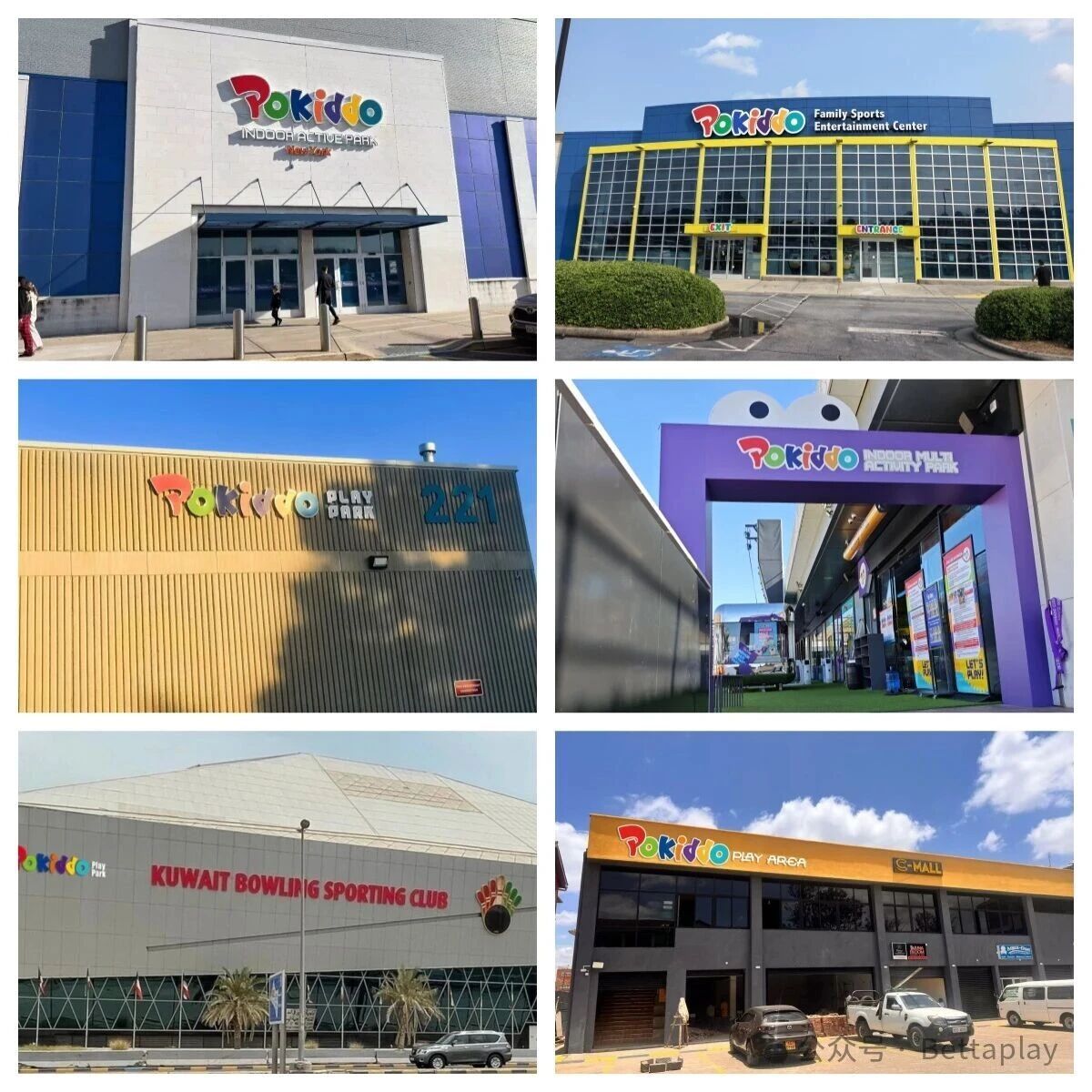
My answer was the same as it always is. Pick one format and you've already capped your revenue. The operators consistently outperforming in our network—across more than 60 Pokiddo locations globally—are the ones who stopped thinking in single categories a long time ago.
The Multi-Functional Complex Is the Ultimate Winning Formula
The Single-Format Trap
Every mainstream format has a ceiling, and once you understand why, the integrated model becomes obvious.
Trampoline parks—the classic model when people think about how to start a trampoline park—have real strengths. Teenagers love them. Average spend per visit is solid. Kids can spend a full day on-site. But walk in with a toddler and you'll see the problem immediately: a two-year-old doesn't belong in a high-energy bounce zone full of teenagers, and most parents know it. You've just excluded an entire demographic.
Soft play solves that problem but creates a different one. It's perfect for ages two to ten, generates strong repeat visits, and kids genuinely don't want to leave. But the ticket prices are lower, and the moment a child turns eleven, they're done with it. You've traded one ceiling for another.
Arcade zones—VR, claw machines, retro games—are rarely why a family chooses a destination. They fill gaps. They generate secondary spend while kids rest between trampoline sessions or while parents wait. Valuable, yes, but not a primary draw on their own.
The pattern is consistent: any standalone format narrows your audience. And a narrow audience means you're one bad month or one new competitor away from real trouble.
What an Integrated Layout Actually Looks Like
The parks in our network that run the strongest numbers use a zone structure built around one principle: every person who walks in should find something made for them.
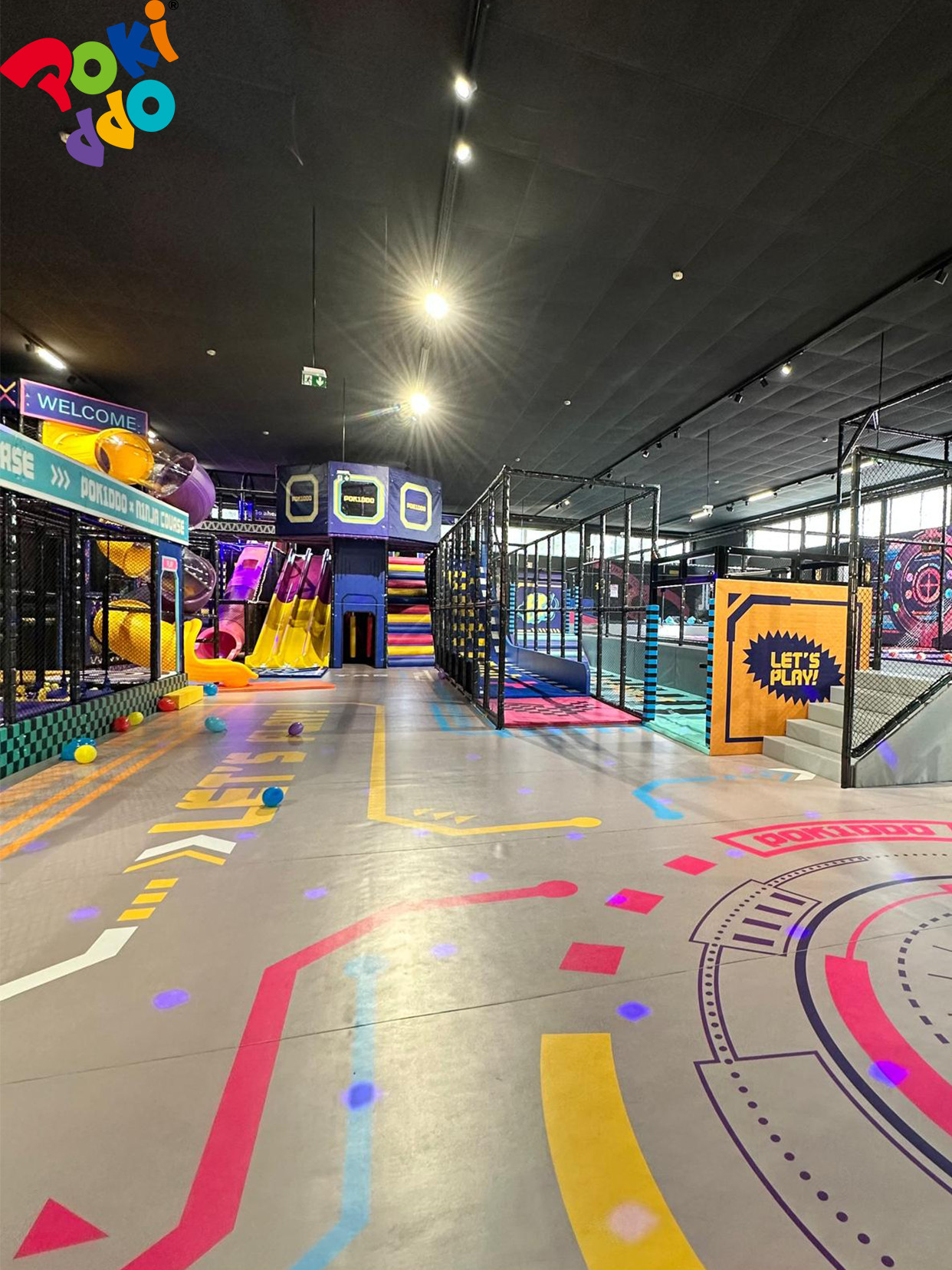
Here's what a 2,000 sq.m integrated venue typically looks like in practice:
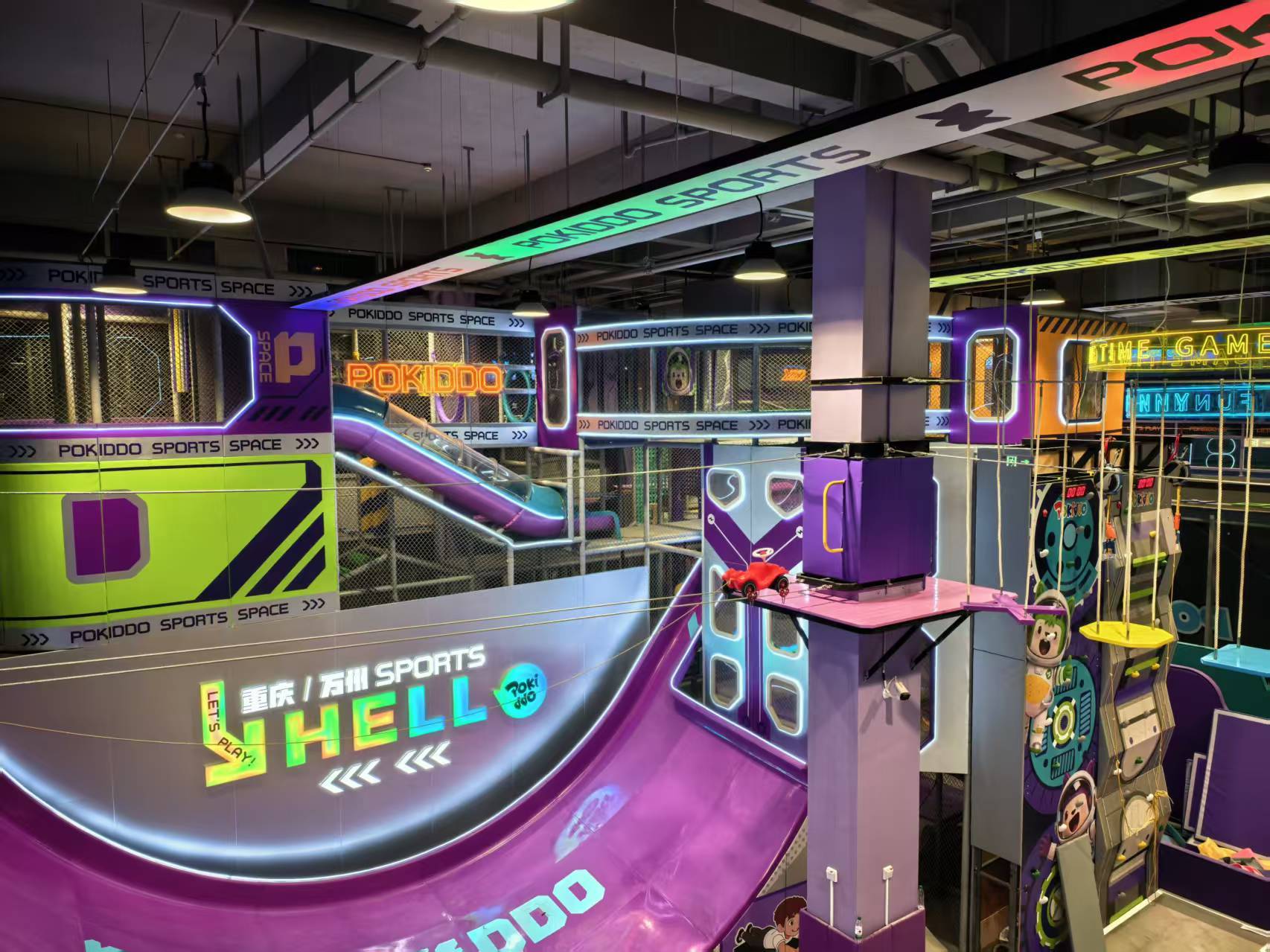
- 600 sq.m of soft play and multi-level slides.
- This is your toddler anchor. It brings in the preschool crowd and the parents who wouldn't otherwise consider a trampoline park. It also sets the tone—families feel welcomed at the entrance rather than uncertain.
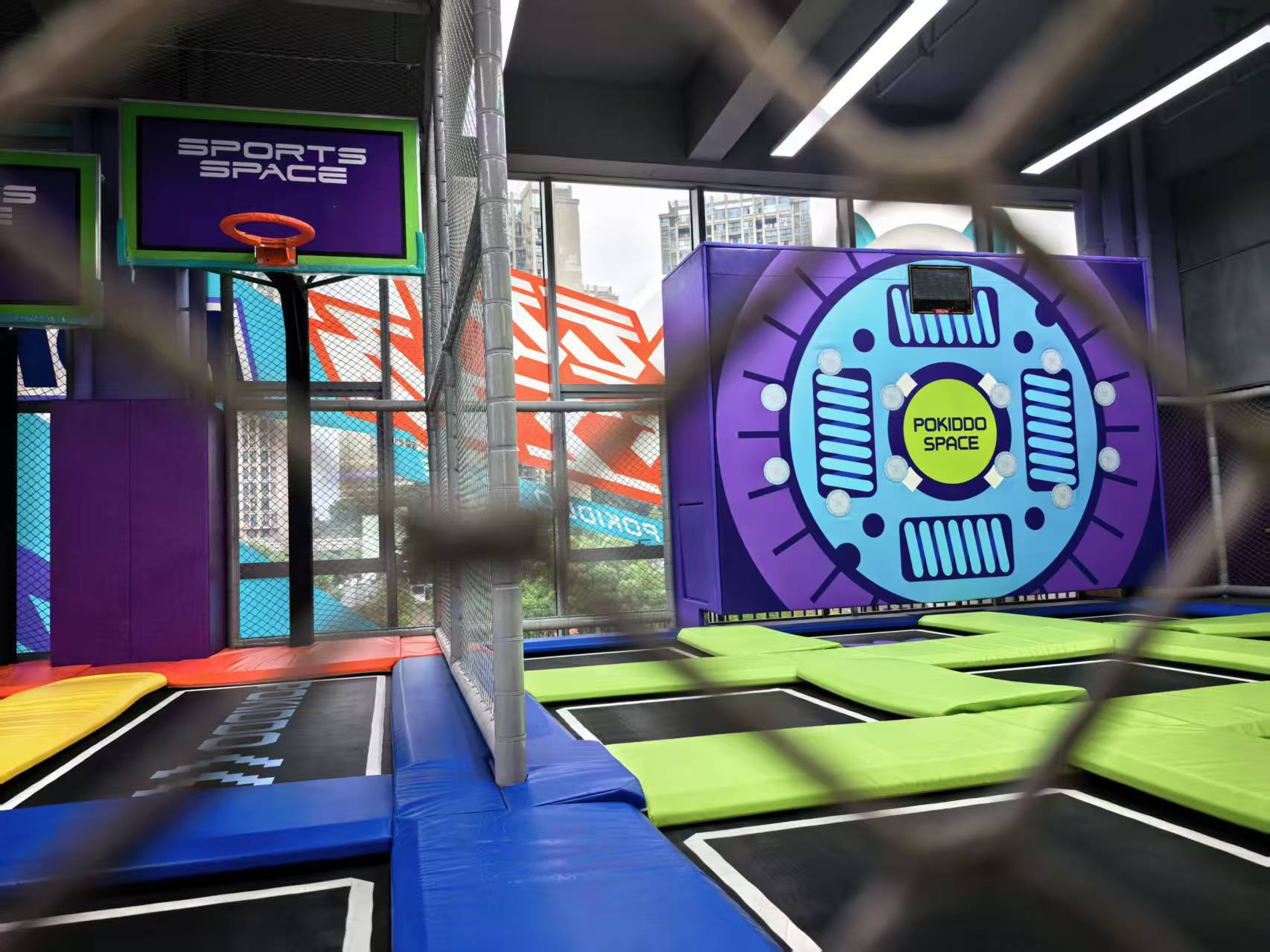
- 400 sq.m of diversified trampoline space.
- Not a flat bounce floor. Dunk hoops, boxing platforms, foam pit swings, interactive response games. The trampoline park equipment mix matters here: variety keeps older kids and adults engaged in ways that a standard free-bounce layout never does.
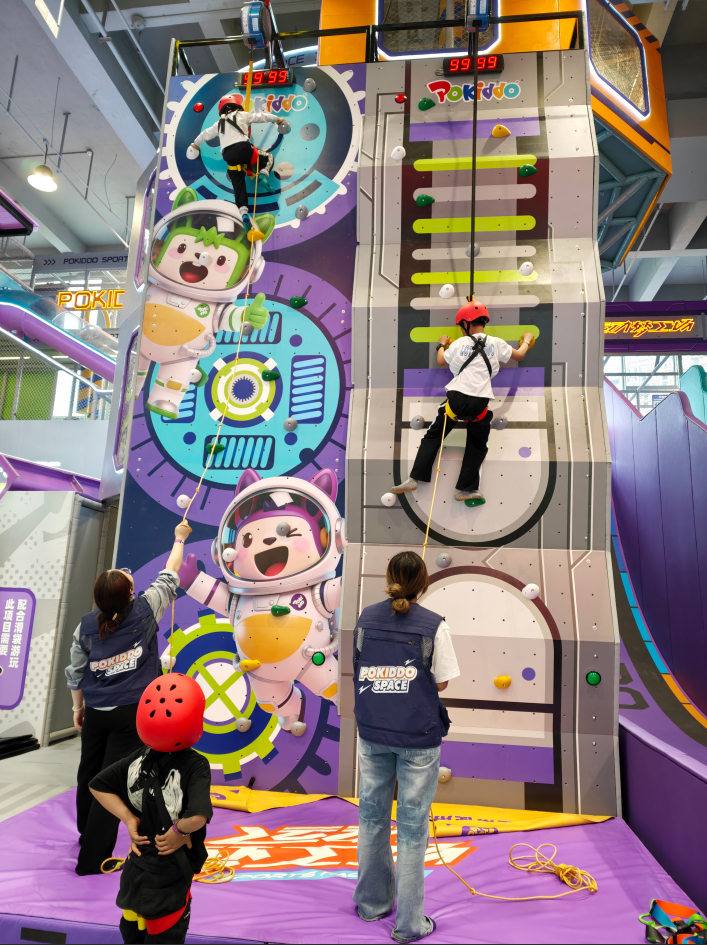
- 200–300 sq.m of high-altitude adventure and climbing.
- Teens and adults are your most underserved demographic in a typical family venue. Walls that require 7-meter ceiling clearance, high ropes, climbing challenges—this is what converts a family outing into something a 16-year-old actually wants to come back for.
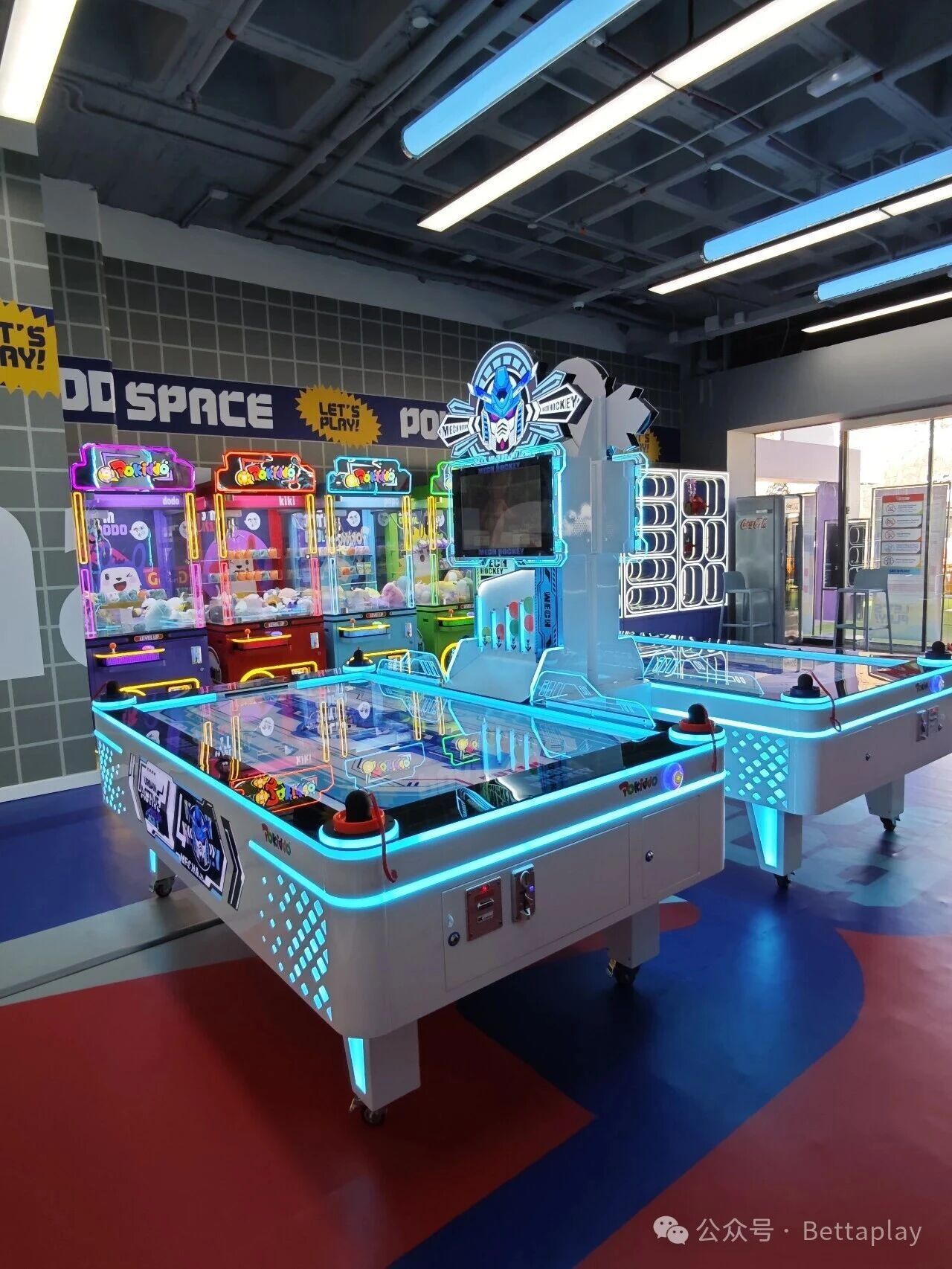
- 200–300 sq.m of arcade.
- The secondary revenue engine. While kids recover between sessions, while parents sit and watch, the token machine keeps running. The trampoline park cost calculation changes significantly when you factor in what a well-placed arcade zone adds to per-family revenue.
- 200–300 sq.m of private party rooms.
- The highest-margin space in the building. Party bookings are paid in advance, they bring in entire social groups, and the room turns over multiple times on a weekend. Any serious indoor trampoline park design that doesn't include dedicated party space is leaving substantial money on the table.

The Portugal Case: No Slow Season
Our Portugal location runs under this integrated model, and it's produced something most operators assume isn't possible: no meaningfully slow periods across the full year.
The weekly programming looks like this. Weekday mornings run toddler fitness classes—structured movement for the under-fives, drawing parents who wouldn't typically visit during school hours. Weekday evenings shift to parent-focused programming: social events, yoga, workshops. The venue stays active and relevant to adults, not just kids.
Full weekends are family visits and birthday bookings. The party rooms are reserved weeks in advance. Staff are fully occupied. Word-of-mouth since opening has been strong and organic.
That scheduling is only possible because the venue has enough zone variety to serve different audiences at different times. A single-format park can't do this—it has one audience, and when that audience isn't there, the venue sits empty.
The Four-Legs Framework
As a trampoline park manufacturer that has designed and operated venues across Asia, Europe, and the Americas, we describe the difference this way to every investor who asks:
A single-format venue is a table standing on one leg. It can stay upright under ideal conditions, but any disruption—a competitor opening nearby, a seasonal lull, a demographic shift in the area—and it tips.
An integrated complex stands on four legs. Soft play, trampoline, high-altitude adventure, arcade and party revenue. Each one supports the others. When one zone has a slow period, the others compensate.
This framework also changes how you think about trampoline park franchise cost versus independent development. A franchise that locks you into a single-format template may be cheaper upfront, but it builds in the ceiling problem from day one. If the franchise model doesn't allow you to integrate multiple formats, that constraint has a long-term cost that doesn't show up in the initial comparison.
And it changes the indoor trampoline park design brief entirely. You're no longer asking "how do I fit more trampolines in?" You're asking "how does a two-year-old and a sixteen-year-old both find something to do in this space—and how does a parent find something to do while they're both busy?"
If You're Still Deciding
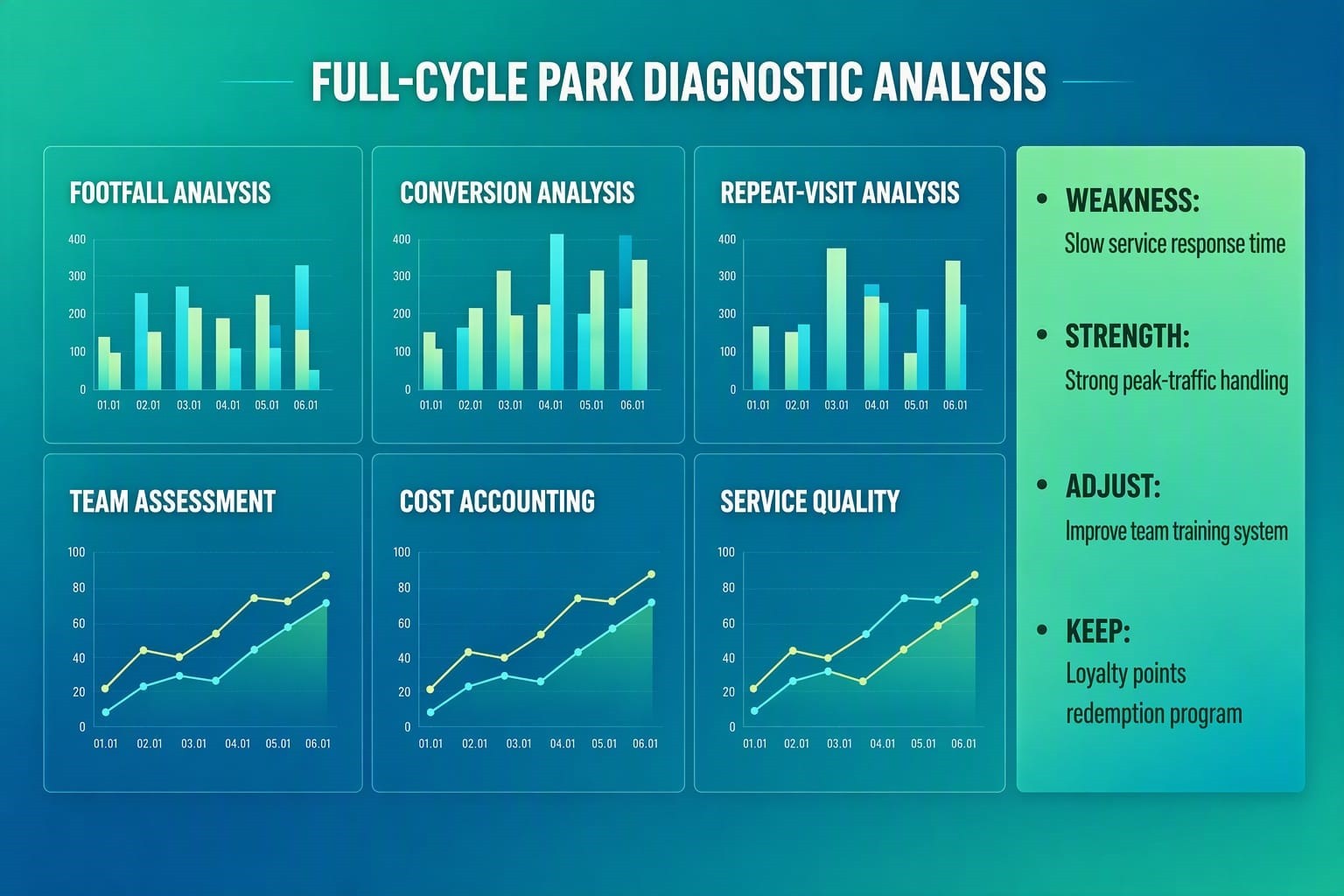
If you're in the planning phase and uncertain about zone ratios, attraction selection, or how to allocate your budget across formats, that's exactly the conversation our team is set up for.
We've made the mistakes ourselves, across enough locations, to know which ones are expensive and which ones are recoverable. The trampoline park franchise cost question, the equipment selection, the indoor trampoline park design—all of it looks different once you've seen sixty venues operate over time.
One leg works until it doesn't. Four legs is just a more durable business.